|
|
|
UPDATED: 9:45 am EST, February 3, 2010 by Mark Sudduth email me
EL NINO MAY BE DYING OUT BUT ITS IMPACT FAR FROM OVER
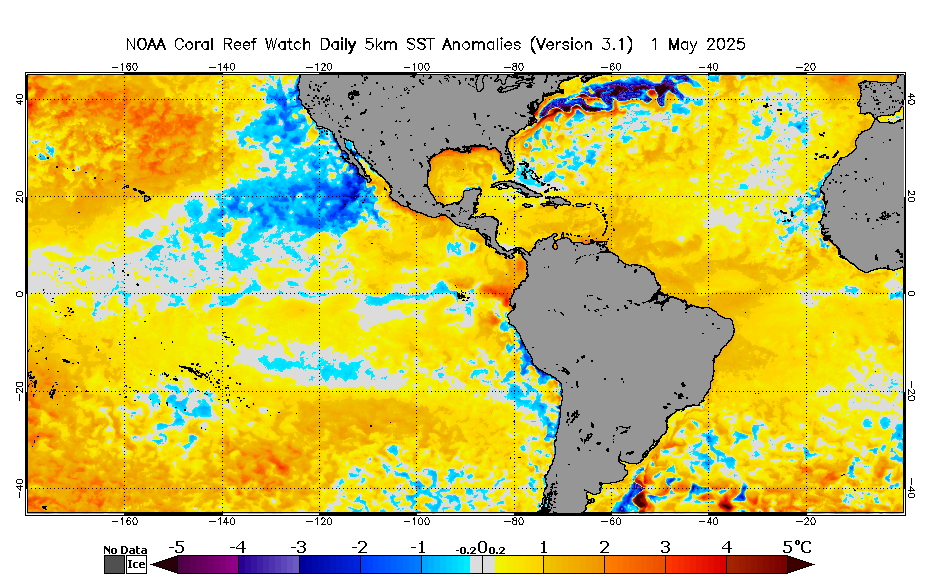
There are continued indications that the fairly strong El Nino that developed last year is in fact on its way out. Computer models and recent real-time data suggests that sea surface temps in the tropical Pacific will continue to decline steadily, reaching neutral conditions, for the most part, by summer. This has huge implications for the upcoming hurricane season- more on that in a few weeks. For now, however, the lingering effects of the El Nino will continue to be felt. The main issue has been a strong southern storm track this winter with numerous systems coming out of the western Gulf and across the Deep South, Southeast and up the East Coast. Many river basins are at or nearing flood stage while heavy snows, ice storms and even severe weather has been a problem for areas from Texas to New England. Unfortunately, there is more to come.
The next storm system is taking shape now over the western Gulf of Mexico. By the weekend, it will be fully cranked up off the NC Outer Banks- bringing wind, rain, snow, beach erosion and cold conditions for a large portion of the Mid-Atlantic region. While not as bad as the Ghost of Ida, at least it does not appear that way as of now, it will be another shot to the already torn up beaches of North Carolina, Virginia, Delaware and points north. As I often suggest here, vist weather.gov where you can enter your ZIP Code and then access detailed forecast information for your city. Read the Forecast Discussions as often as you can, they have excellent info, some of it fairly technical, but solid to be sure. The more you understand, the better you can prepare- no matter what kind of weather is headed your way.
Another interesting note is the SOI or Southern Oscillation Index. I mentioned this in an earlier piece I wrote about the El Nino. The SOI is currently strongly negative, a sign of intense upward motion or energy parked over the western tropical Pacific. This energy, part of the MJO pulse that we watch closely during the hurricane season, will migrate eastward over the next week to ten days, bringing with it more challenging weather issues. It is probably the last gasp of the driving forces behind the decaying El Nino. February may well be remembered as one of the stormiest months we have seen in a long, long time. For coastal residents, it means more loss of protective dunes and increased vulnerability to any potential hurricane threats this coming summer. I'll post more here as needed and encourage you to follow along on Twitter as well- where I post occassional tid bits, links to graphics, satellite shots, etc. on a daily basis.
About Us | For the Media | Email Us | Privacy Policy | Shop our Store
Copyright 2010, Mark Sudduth, Hurricane Maps Enterprises, All Rights Reserved
|
|
| |
|
Premium Services
Member Log In
| |
Powered by:

|
Wind Speed & Pressure Calculator
| |
Our Partners and Sponsors
|
|
Other Hurricane Resource Sites:
| |
|
|